The 2027 Deadline Public Facilities Can't Afford to Ignore: Aligning Digital and Physical Accessibility Under ADA Title II

A readiness brief for public-sector operations and facilities leaders on aligning physical wayfinding upgrades with the extended Title II digital accessibility timeline.
The Extension: What Changed on April 20, 2026
On April 20, 2026, the U.S. Department of Justice published an Interim Final Rule (IFR) in the Federal Register revising the regulations implementing Title II of the Americans with Disabilities Act.1 The Department is extending the compliance dates for the requirements for web content and mobile application accessibility that were adopted on April 24, 2024.1
The compliance date for State and local government entities with a total population of 50,000 or more is extended from April 24, 2026, to April 26, 2027. The compliance date for public entities with a total population of less than 50,000, or any special district government, is extended from April 26, 2027, to April 26, 2028.1
Critically, the extension moved the calendar but not the substance. The technical standard, the scope, and the exceptions are unchanged—only the dates moved.2 The 2024 rule's benchmark remains in force: the 2024 DOJ rule adopted WCAG 2.1 Level AA as the technical standard for the web content and mobile apps that state and local government entities provide or make available.4 The IFR is effective April 20, 2026, and written comments must be submitted on or before June 22, 2026.1
The Department has also signaled this may not be the final word. While the IFR does not revise any other aspect of the regulations under the ADA, the DOJ signaled that it intends to conduct additional review of the digital accessibility requirements.4
The Legal Pushback
The extension drew immediate and pointed opposition from disability advocates. The American Association of People with Disabilities framed it as a setback, with AAPD President and CEO Maria Town stating that extending the compliance deadline for large jurisdictions to April 2027 and for smaller jurisdictions to April 2028 is "a profound disappointment and a serious setback for the disability community."5
The American Council of the Blind noted the historical weight of the delay, observing that under this IFR, the progress made with the 2024 final rule—which followed approximately 14 years of dedicated consideration and public comment—has been postponed.6 The organization signaled formal opposition, stating that ACB will be submitting formal comments in opposition to this IFR once it has been published, and encourages members and other advocates to also submit comments during the 60-day public comment period and call on the Department of Justice to reverse this decision.6
The practical takeaway for facilities leaders: the underlying civil-rights obligation never paused. Existing ADA Title II obligations for accessible digital services continue now.3
Why Physical Wayfinding Belongs in the Same Conversation
Title II is not a digital-only mandate. The same statute that governs websites governs physical signage under the 2010 ADA Standards for Accessible Design. ADA signage standards, as defined in Section 703 of the 2010 ADA Standards for Accessible Design, apply to all permanent rooms and spaces that identify, direct, or inform users.7
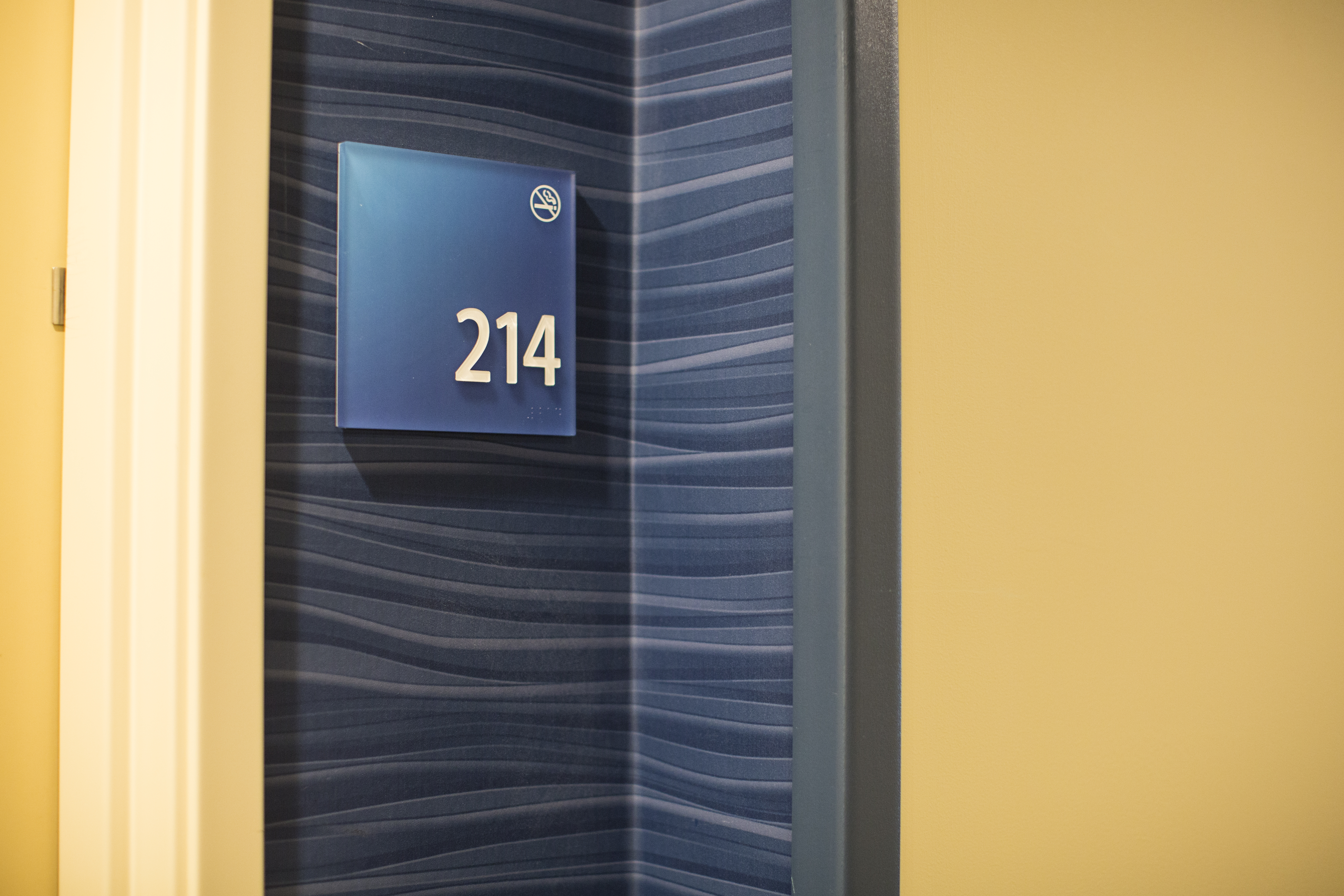
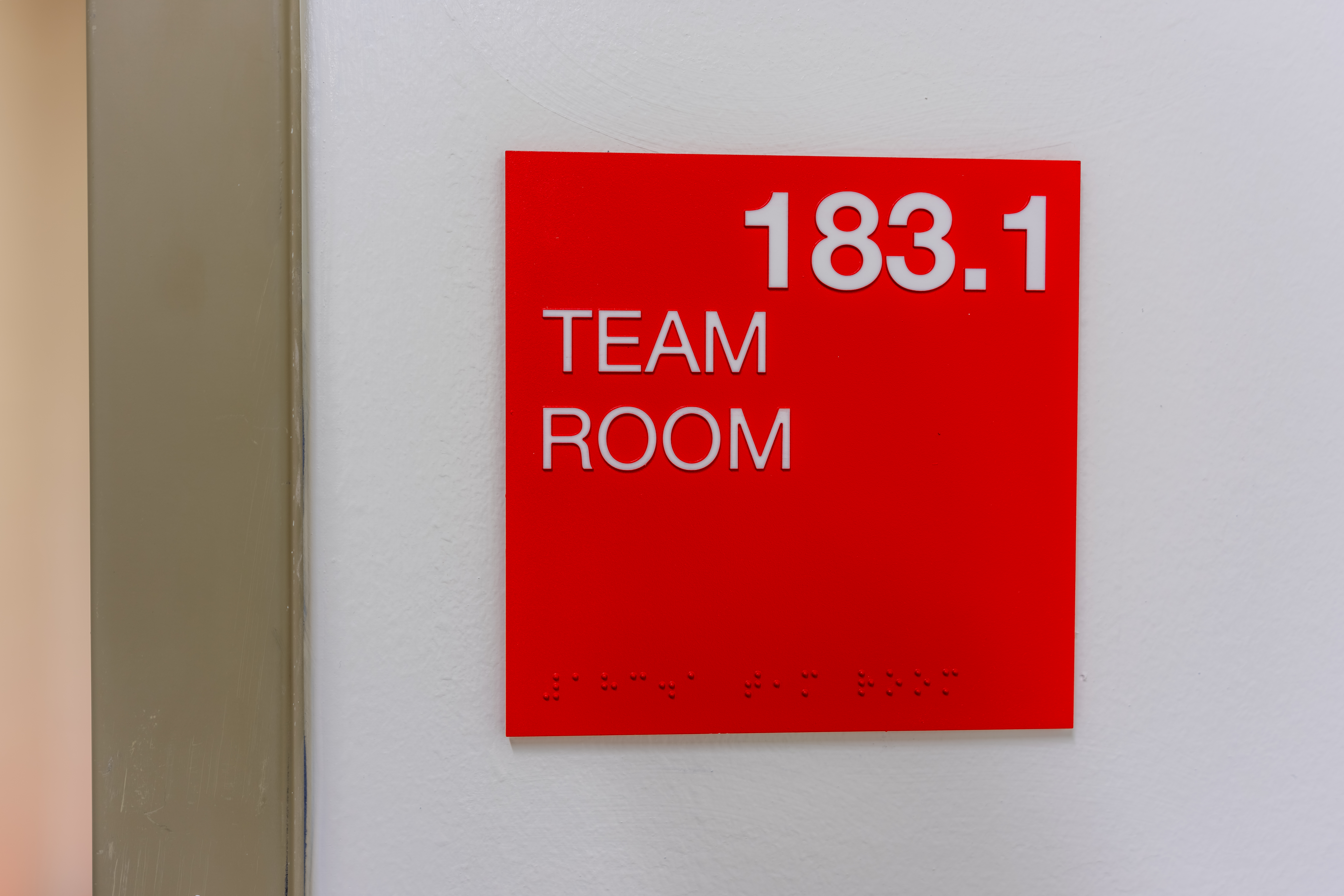
The core physical requirements are precise and enforceable. Tactile signs must include compliant raised characters and braille characters and be located at doors 48" to 60" above the floor or ground.7 More specifically, raised characters and braille on signs must be located 48 inches minimum above the finish floor or ground surface, measured from the baseline of the lowest tactile character, and 60 inches maximum, measured from the baseline of the highest tactile character.10 Placement is equally regulated: a clear floor space 18 inches minimum by 18 inches minimum must be centered on the tactile characters, providing unobstructed standing space at the sign for reading by touch, and this space must be free of any protrusions to a height of 80 inches.9
Character formatting carries its own specifications. Raised characters shall be 1/32 inch minimum above their background, shall be uppercase, and shall be sans serif.11 On the visual side, characters and their background shall have a non-glare finish, and characters shall contrast with their background with either light characters on a dark background or dark characters on a light background.8
These physical obligations already exist and are already enforceable—which is precisely why the digital extension is an operational opportunity, not a reason to defer.
The Population Rationale for Coordinated Upgrades
The scale of the affected user base makes both channels business-critical. Approximately 28.7% of U.S. adults, roughly 61 million people, have at least one disability, according to the CDC's Disability and Health data.14 The most recent CDC National Health Interview Survey data underscores the sensory and mobility dimensions most relevant to wayfinding: 18.0% of adults age 18 and older report any difficulty seeing, 15.7% report any difficulty hearing, and 18.2% report any difficulty walking or climbing steps (2024).15
A single blind or low-vision visitor to a courthouse, DMV, transit hub, or clinic depends on both an accessible website to plan the visit and compliant tactile signage to navigate the building on arrival. Treating these as separate projects fragments budgets and duplicates vendor mobilization.
The Litigation Backdrop
Enforcement pressure remains structurally elevated even amid the extension. There were 8,667 ADA Title III lawsuits filed in or removed to federal district courts in 2025—2% fewer than in 2024—but still three times higher than the number of filings in 2013.17 Digital accessibility is a growing share of that volume: website accessibility lawsuits accounted for 36% of the total number of ADA Title III lawsuits filed in federal court in 2025 (3,117 out of 8,667 cases).16 That represents momentum, not decline—in 2025, plaintiffs filed 3,117 website accessibility lawsuits in federal court, a 27% increase over 2024.16
While much litigation targets private Title III defendants, the trend signals sustained plaintiff and DOJ attention to accessibility gaps that public entities cannot assume they are immune from.18
A Coordinated 2027-Readiness Roadmap
1. Confirm your deadline. Population is calculated at the jurisdiction level. Large public entities now have until April 26, 2027; smaller entities and special district governments have until April 26, 2028.19 For many institutions, the larger-entity timeline effectively applies because population is calculated at the state level, which effectively includes nearly all public universities.3
2. Do not slow digital remediation. The obligation is unchanged; use the extra year to build a durable program. Administrators are encouraged to maintain their WCAG 2.1 remediation plans, prioritizing high-traffic pages and student-facing systems, and document ongoing efforts as a compliance record.3
3. Audit signage against Section 703 in parallel. Prioritize the most common failure points. Field guidance identifies recurring violations: signs placed outside the 48- to 60-inch tactile range or within a door swing; permanent room signs missing raised characters or Grade 2 Braille; flat dots or incorrect Braille spacing; and weak color contrast or glossy finishes that obscure text.12
4. Standardize mounting to reduce install error. Incorrect mounting height is the leading cause of inspection failures, and even a half-inch off can cost businesses reinstallation expenses and delays.13 A common industry practice is a 54-inch centerline, which keeps varied sign sizes within the required band on a consistent visual line.
5. Sequence physical and digital procurement together. Aligning the signage audit with the digital remediation timeline lets a facilities team mobilize survey crews, capture room-by-room data once, and feed it into both the wayfinding replacement schedule and the website's accessible facility information.

Bottom Line
The DOJ bought public facilities time, not relief. The WCAG 2.1 Level AA standard, the scope, and the exceptions all remain intact, and the parallel physical signage obligations under Section 703 never had a deadline extension because they were already in force. Facilities and operations leaders who treat April 2027 as a coordinated digital-and-physical accessibility program—rather than a website project—will meet the deadline more cheaply, defensibly, and completely.
References
- Federal Register — Extension of Compliance Dates for Nondiscrimination on the Basis of Disability; Accessibility of Web Information and Services of State and Local Government Entities. https://www.federalregister.gov/documents/2026/04/20/2026-07663/extension-of-compliance-dates-for-nondiscrimination-on-the-basis-of-disability-accessibility-of-web
- Accessibility.build — DOJ Title II Deadline Extension (April 2026): What Changed, What Didn't, Why You Shouldn't Slow Down. https://accessibility.build/guides/doj-title-ii-deadline-extension
- University of Arizona (Accessibility) — DOJ Issues Interim Final Rule on Title II Digital Accessibility Compliance Dates. https://accessibility.arizona.edu/news/doj-issues-interim-final-rule-title-ii-digital-accessibility-compliance-dates
- Reed Smith — DOJ extends digital accessibility compliance dates under Title II of the ADA. https://www.reedsmith.com/articles/doj-extends-digital-accessibility-compliance-dates-under-title-ii-of-the-ada/
- AAPD — AAPD Statement on DOJ Title II Web Rule Interim Final Rule. https://www.aapd.com/aapd-statement-title-ii-doj-web-rule-ifr/
- American Council of the Blind — Notice of Title II Interim Final Rule Publication on April 20, 2026. https://www.acb.org/notice-title-ii-interim-final-rule-publication-april-20-2026
- BlinkSigns — ADA Signage Technical Specs and Design Guide. https://blinksigns.com/ada-signage-technical-specs/
- Corada — Guide to the ADA Standards: Signs [ADA Standards §216, §703]. https://www.corada.com/documents/guide-to-the-ada-standards/signs-ada-standards-216-703
- U.S. Access Board — Chapter 7: Signs. https://www.access-board.gov/ada/guides/chapter-7-signs/
- Corada — ADA Standard Section 703 - Signs. https://www.corada.com/documents/2010ADAStandards/703
- ADA Compliance — 703 Signs. http://www.ada-compliance.com/ada-compliance/703-signs
- Duncan-Parnell — ADA Signage Requirements: Compliance Guide. https://www.duncan-parnell.com/blog/10376/ada-signage-compliance-guide-duncan-parnell
- BlinkSigns — ADA Sign Placement & Installation Guide 2025. https://blinksigns.com/ada-sign-placement-installation-guide-2025/
- AudioEye — Disability Statistics in the U.S.: Key Data on Prevalence, Types, and Accessibility. https://www.audioeye.com/post/disability-statistics-in-the-us/
- CDC/NCHS — Disability and Functioning (FastStats). https://cdc.gov/nchs/fastats/disability.htm
- Seyfarth Shaw / ADA Title III — Federal Court Website Accessibility Lawsuit Filings Bounce Back in 2025. https://www.adatitleiii.com/2026/03/federal-court-website-accessibility-lawsuit-filings-bounce-back-in-2025/
- Seyfarth Shaw / ADA Title III — ADA Title III Federal Lawsuit Filings Fall Slightly to 8,667 in 2025. https://www.adatitleiii.com/2026/02/ada-title-iii-federal-lawsuit-filings-fall-slightly-to-8667-in-2025/
- beAccessible — ADA Lawsuit Statistics by Year, Industry, and State. https://beaccessible.com/post/americans-with-disabilities-act-statistics/
- UPCEA — DOJ Extends Accessibility Deadline to April 2027 | Policy Matters (April 2026). https://upcea.edu/doj-extends-accessibility-deadline-to-april-2027-policy-matters-april-2026/
- UsableNet — Title II Compliance Timeline: Key Dates and Deadlines. https://blog.usablenet.com/title-ii-compliance-deadline-2026